

Most people think coffee begins at the roaster. But the truth is, your morning ritual starts thousands of miles away, in soil enriched by centuries of volcanic activity, tended by hands that have perfected their craft across generations.
At The Roasting Ritual, we believe that understanding this journey transforms how you experience every sip. This isn’t just origin storytelling—it’s recognizing that excellence in your cup is the result of intention at every stage.
The Altitude Advantage
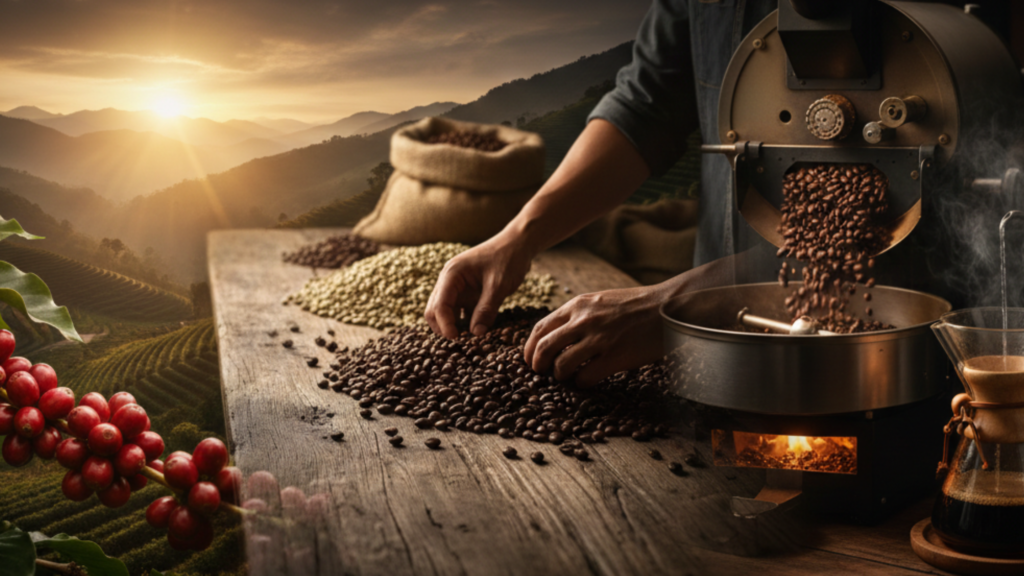
High in the mountains of Karnataka, Nilgiris, and the Araku Valley, something extraordinary happens. Coffee grown above 1,200 meters develops slowly. The cooler temperatures, intense sunlight, and mineral-rich volcanic soil create stress—the good kind.
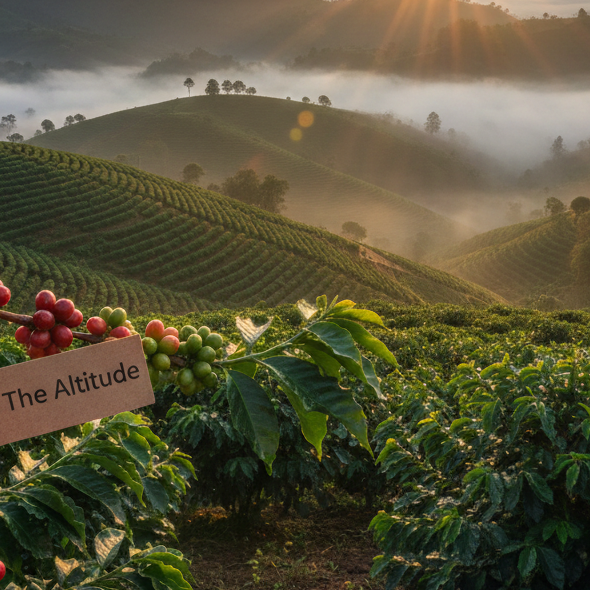
This stress forces the coffee cherry to develop complex sugars and acids. The beans grow denser. Flavors become more pronounced. What might take three months at sea level takes five months at altitude. Patience, quite literally, creates depth.
When you brew our Nilgiris Heights, you’re tasting the result of that patience—bright citrus notes balanced by the sweetness that only high-altitude growth can achieve.
The Human Element
Here’s what doesn’t show up on a bag label: the farmer who walks their land every morning, checking each plant. The picker who harvests only the ripest cherries, leaving the rest for another day. The sorter who removes any defect by hand.
Single-origin coffee isn’t just about geography. It’s about the relationship between people and land, repeated daily for decades. These farms aren’t industrial operations—they’re multigenerational commitments to a specific place and its potential.
Our Shadow Work blend comes from farmers in Chikmagalur who learned their craft from their grandparents. They know which slopes produce the boldest flavors. Which processing methods bring out chocolate notes versus fruity brightness. This knowledge isn’t written down—it’s lived.
Processing: Where Chemistry Meets Craft
After harvest, the real alchemy begins. The processing method—how the fruit is removed from the bean—dramatically impacts what ends up in your cup.
Washed processing creates clean, bright flavors. The fruit is removed immediately, and the beans ferment in water before drying. This is precision and control.
Natural processing leaves the cherry intact while it dries. The beans absorb sugars from the fruit, creating wilder, fruitier flavors. This is patience and risk—too much moisture and the batch spoils.
Honey processing splits the difference—some fruit remains during drying. The result? Complexity. Sweetness with clarity.
The choice isn’t better or worse. It’s intentional difference. Each method is a conversation between the farmer and the bean, asking: what do you want to become?
The Roasting Ritual
This is where we enter the story. Raw green beans arrive at our facility with potential locked inside. Our job is to unlock it without destroying it.
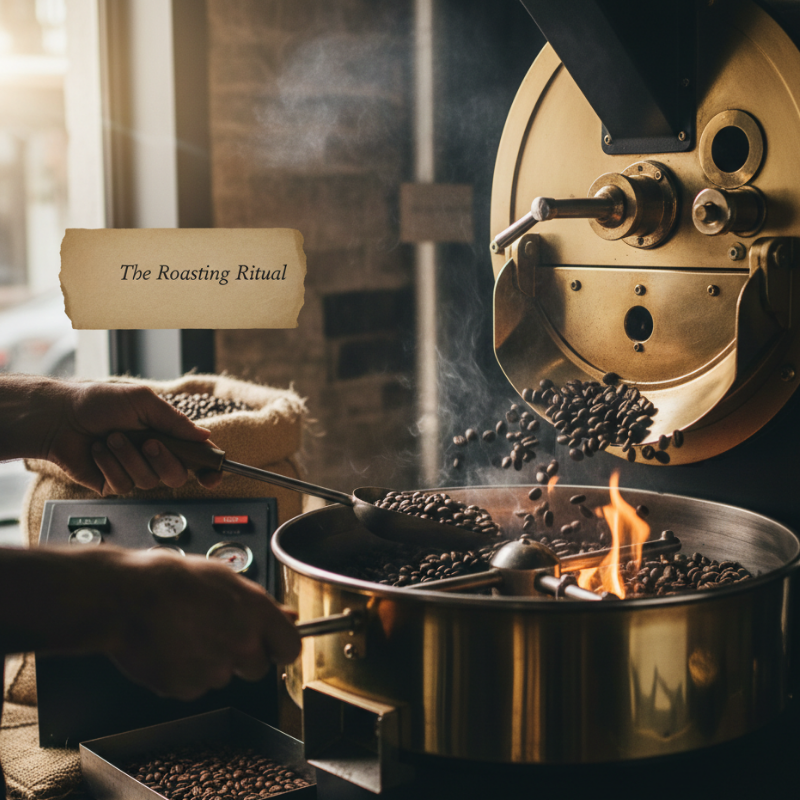
Small-batch roasting isn’t romantic inefficiency—it’s necessity. In large industrial roasters, beans on the outside receive different heat than beans in the center. Consistency becomes impossible. We roast in batches small enough that every bean experiences the same temperature curve.
We’re listening for the first crack—when internal moisture becomes steam and the bean structure breaks, watching color development and also smelling the transformation from grassy to caramelized to fully developed.
Stop too early, and flavors remain muted. Go too far, and origin character burns away, leaving only carbon bitterness. The window of perfection is often less than thirty seconds.
Every origin requires a different approach. Beans from Araku Valley need a gentler touch to preserve their delicate floral notes. Karnataka beans can handle more heat, developing their bold chocolate character. This isn’t formula—it’s dialogue.
The Water Nobody Talks About
Here’s the truth that frustrates perfectionist brewers: coffee is 98% water. Your brew method matters less than your water chemistry.

Minerals in water extract flavor compounds from coffee. Too few minerals, and extraction is weak—your coffee tastes flat. Too many, and you get bitterness and astringency. The ideal range is narrow.
If your coffee tastes different when you travel, water is why. If it tastes better at your favorite café, water might be why. This isn’t snobbery—it’s chemistry.
For home brewing, filtered water works well. If you want to optimize further, look for water with 50-150 ppm total dissolved solids. Or use third-wave water additives designed specifically for coffee.
Freshness: The Invisible Ingredient
Coffee doesn’t go bad—it goes stale. The difference matters.
The moment we roast, coffee begins releasing CO2 and volatile aromatics. This is the “bloom” you see when hot water first hits the grounds. Fresh coffee blooms vigorously. Old coffee barely reacts.
Peak flavor hits around 7-14 days post-roast and lasts for about a month if properly stored. After that, the brightness fades. Complexity flattens. What remains is technically drinkable but spiritually defeated.
This is why we roast to order and date every bag. We want you to experience coffee in its prime—vibrant, complex, alive.
Store your beans in an airtight container, away from light and heat. Don’t freeze them. Don’t refrigerate them. Just keep them sealed and use them within a month of roasting.
The Grind Moment
Whole beans preserve flavor because the protective outer structure remains intact. The moment you grind, surface area increases exponentially. Aromatics escape. Oxidation accelerates.
Pre-ground coffee is convenience at the cost of quality. The difference between grinding immediately before brewing versus ten minutes before is noticeable. Grind the night before? Even worse.
If you’re serious about your morning ritual, a burr grinder is the single most important investment after the beans themselves. It doesn’t need to be expensive—consistency matters more than cost.
And grind size? Match it to your brew method. Espresso needs powder-fine. Pour-over wants medium. French press prefers coarse. The reason: extraction time. Fine grinds extract quickly. Coarse grinds need more time. Mismatch them, and you get either sour under-extraction or bitter over-extraction.
From Soil to Soul
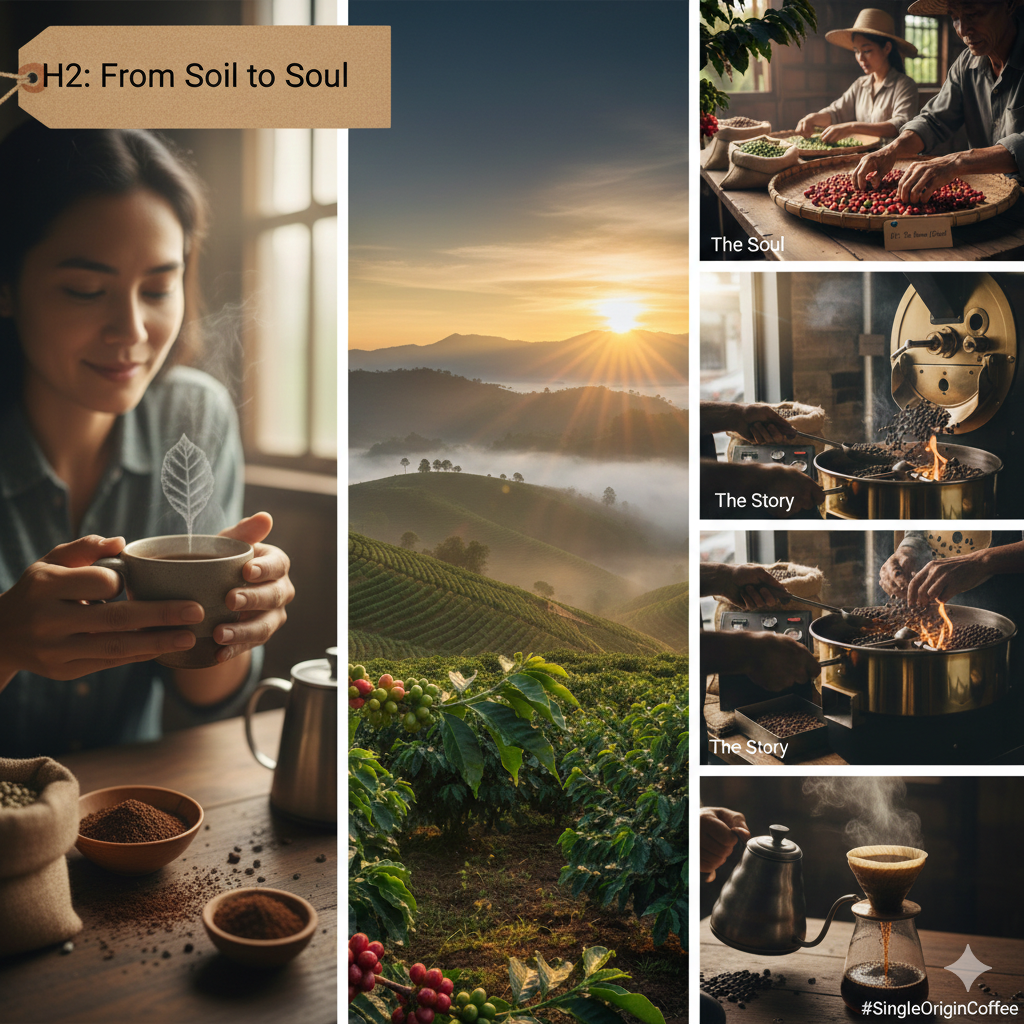
This is why we call it The Roasting Ritual. Every cup connects you to volcanic soil, mountain air, careful hands, precise timing, and intentional craft.
When you slow down enough to taste it—really taste it—you’re not just consuming caffeine. You’re participating in a chain of care that spans continents and cultures. You’re honoring the work of farmers, the patience of processors, the precision of roasters.
That’s the breakthrough we’re after. Not a better cup of coffee, though that’s a welcome result. But a recognition that attention creates meaning. That ritual transforms routine. That what we do every day becomes who we are.
Your morning coffee can be a rushed necessity, consumed while checking email and planning the day ahead. Or it can be something else entirely—a moment of presence, a practice of gratitude, a daily reminder that excellence comes from care.
The choice, like everything in life, is yours.
Read more about coffee on Britannica
Experience the full journey from soil to soul with our curated collection of single-origin beans. Each bag tells a story. Every cup honors the craft.
Blogread our more blogs here